UNDERSTANDING COFFEE
Coffee makes more sense when you follow what happens to the seed.
Coffee biology, processing, fermentation, chemistry and climate explained in plain English and grounded in published research.
I came to coffee through roasting, but the more I learned, the more the questions moved backwards: what is the bean, what happened to it before it reached the roaster, and how did biology, processing and people shape what eventually ends up in the cup?
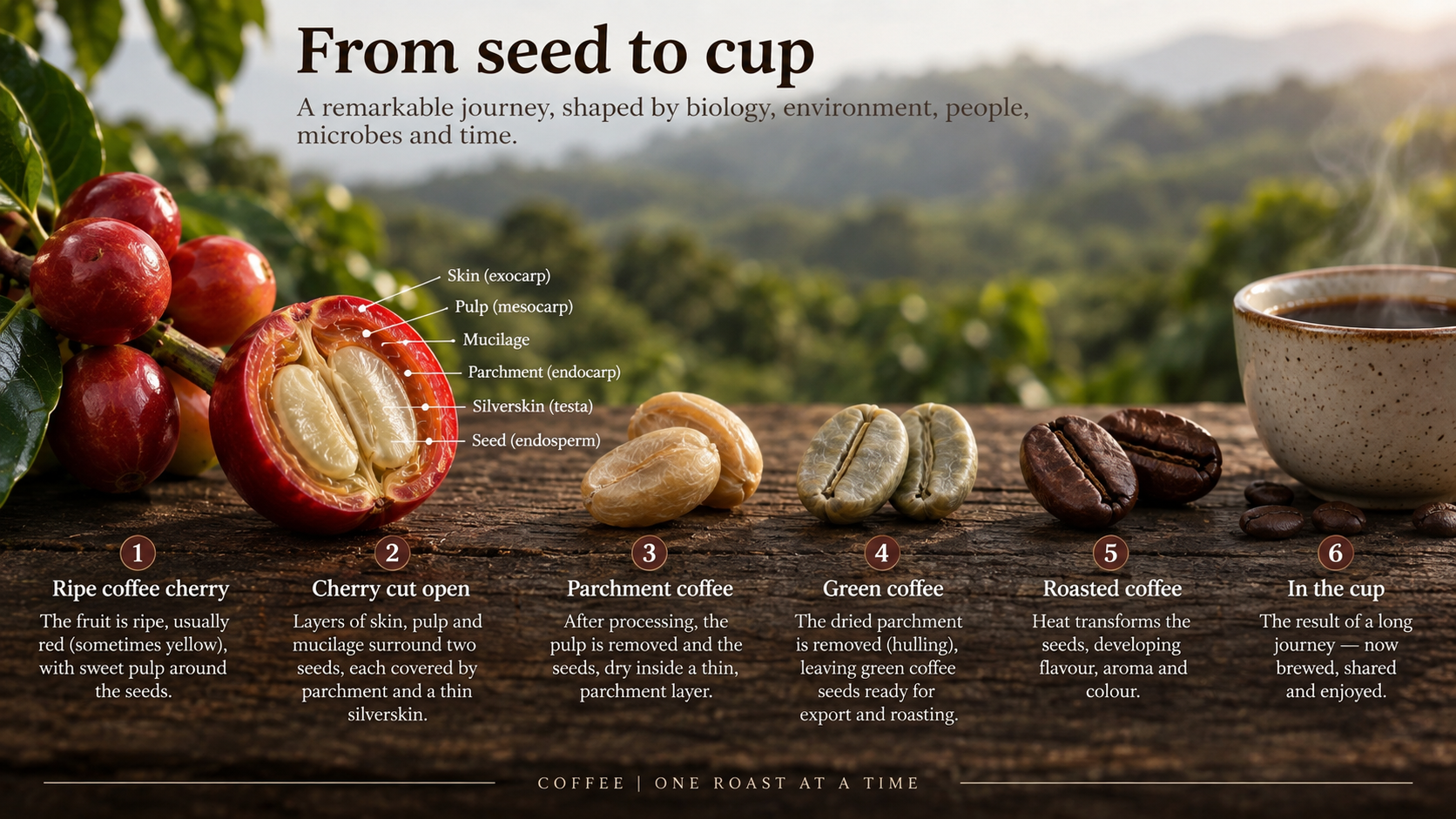
Explore coffee from fruit to cup
The coffee fruit & seed
What the coffee bean actually is: fruit, mucilage, parchment, endosperm, embryo and the living seed.
Processing
Washed, natural, honey and other processes — what is removed, what remains and why it matters.
Species & varieties
Arabica, Canephora, varieties, hybrids and the genetic diversity hidden behind familiar coffee names.
Microbes & fermentation
Yeasts, bacteria, microbial succession, spontaneous fermentation and starter cultures.
Chemistry to cup
How sugars, acids, amino acids and microbial metabolites become part of the chemistry a roaster eventually works with.
Coming next.
Coffee & climate
Heat, water, drought, genetics and what climate change may mean for the coffees we grow.
Coming next.
PROCESSING IN PRACTICE
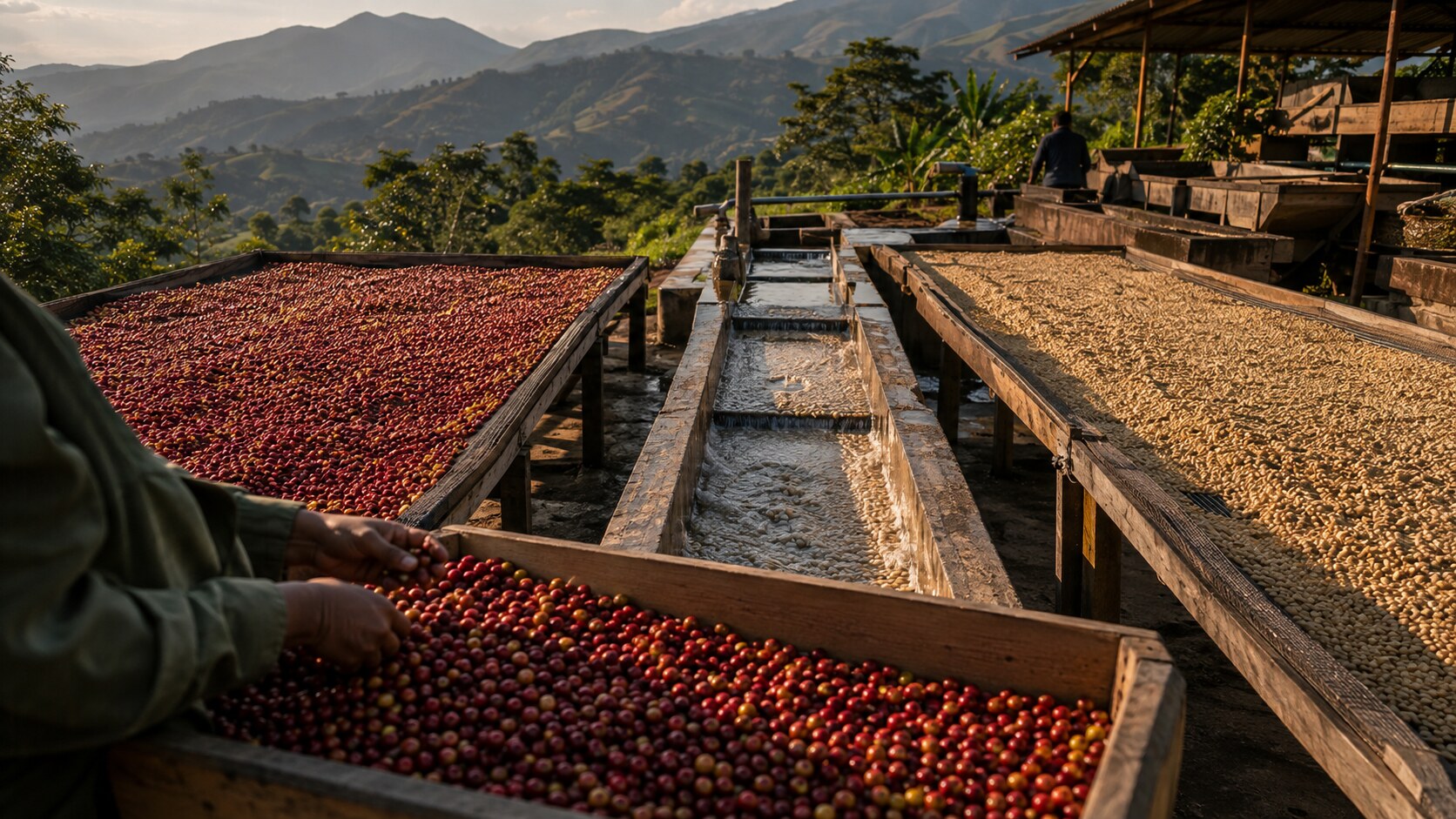
Processing is a path, not a flavour promise
Washed, natural, honey and other labels describe choices made after harvest: what remains around the seed, how fermentation is managed, how water is used and how the coffee is dried. They help us ask better questions, but they do not guarantee one particular taste.
HOW THE EVIDENCE IS HANDLED
What we know · What evidence suggests · What remains open
These pages are educational summaries, not original scientific research. Where research is used, the original work is referenced. Established findings, developing evidence and open questions are kept separate wherever possible.