UNDERSTANDING COFFEE → MICROBES & FERMENTATION
Microbes & Fermentation
Yeasts, bacteria, changing environments and the surprisingly complicated biology between coffee fruit and green bean.
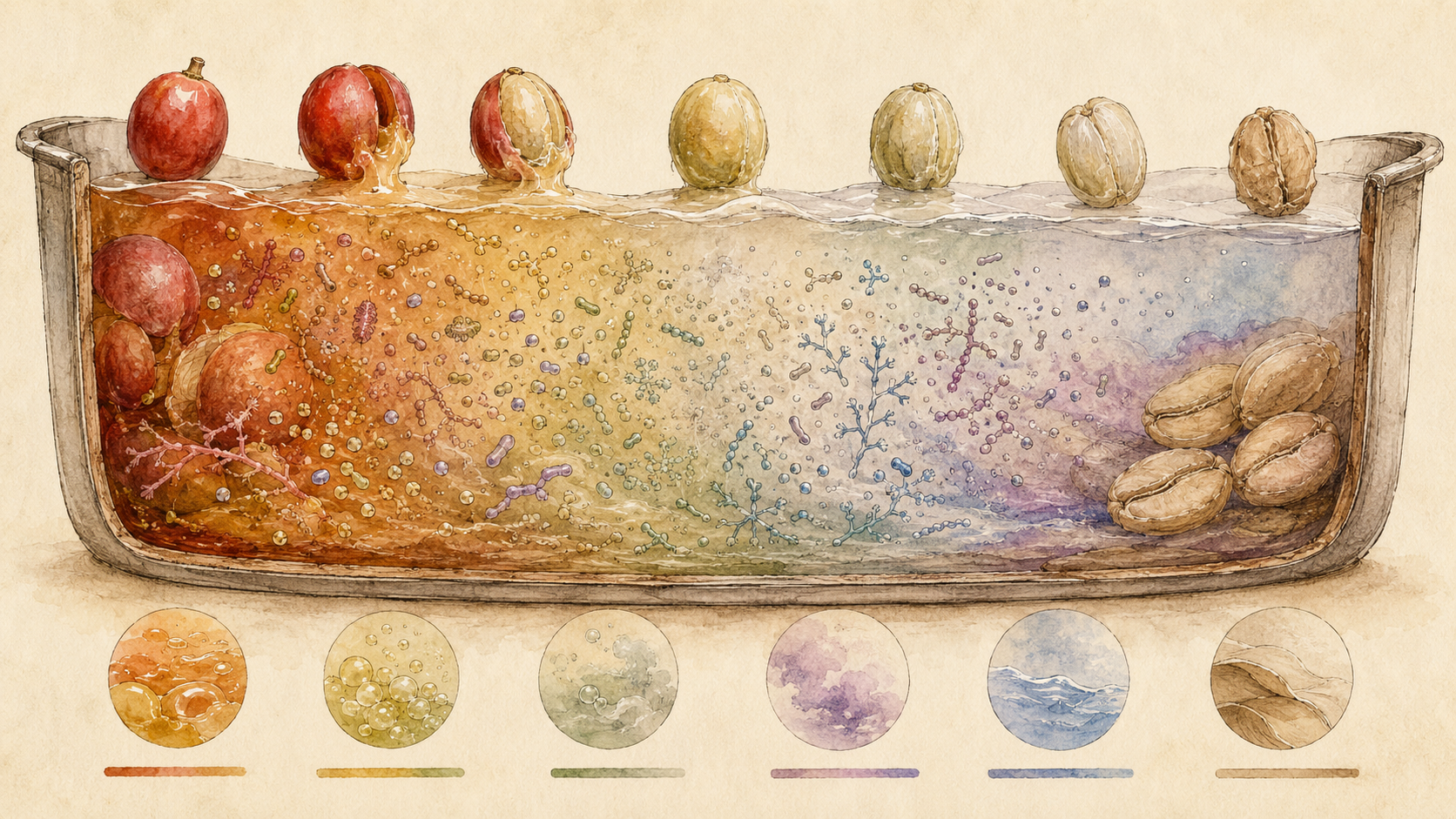
Fermentation makes more sense when we stop imagining a contest between “good” and “bad” microbes and start thinking about ecology.
Coffee fruit arrives with a diverse microbial community. Processing changes its environment; some organisms become more competitive, others decline, and the community shifts. Those organisms consume available compounds, produce metabolites and interact with a coffee seed that is itself still biologically active.
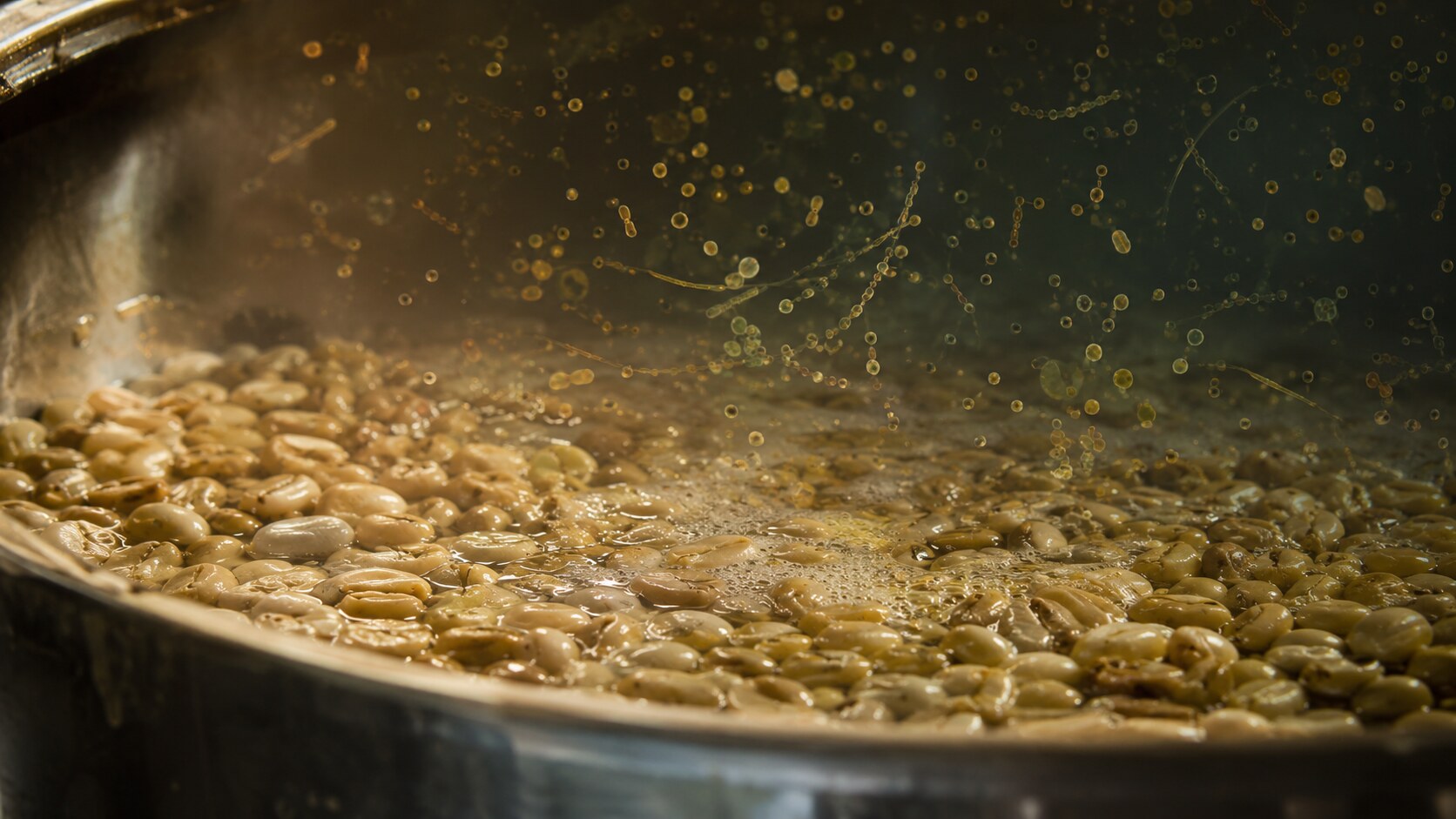
THE WORKING MODEL
Environment → selection → succession → chemistry
Temperature, oxygen availability, water, acidity, time, available sugars, cherry condition, processing method and sanitation all influence which microorganisms are able to thrive. As those organisms grow, they alter the environment again—which changes who is best suited to live there next.
Controlled fermentation does not mean controlling every microbe. It means changing and monitoring the odds.
Four ideas make the biology easier to follow
1. Environment
A whole cherry on a drying bed, pulped coffee in an open tank and submerged parchment in a sealed vessel are very different habitats. The label “fermented” does not describe those conditions.
2. Selection
Conditions favour organisms able to use the available nutrients and tolerate the current temperature, acidity, moisture and oxygen level. Selection here means ecological advantage, not deliberate choice by the producer.
3. Succession
The dominant community can change as sugars are consumed and acids, alcohols, carbon dioxide and other metabolites accumulate. There is no single universal order that applies to every coffee fermentation.
4. Chemistry
Microbial metabolism changes the material surrounding the seed. Some compounds may influence green-coffee chemistry, but the path into the roasted cup also depends on seed barriers, drying, storage and roasting.
Three microbial groups you will meet often
These broad groups are useful signposts, not fixed job descriptions. Different species—and even different strains within a species—can behave differently.
Yeasts
Many yeasts use fruit sugars and can produce ethanol, carbon dioxide and a range of aroma-active metabolites. Some also contribute enzymes that help alter fruit material and mucilage. Their importance depends on the species, strain and environment.
Lactic-acid bacteria
These bacteria can convert sugars and related substrates into lactic acid and other metabolites. Many tolerate increasingly acidic conditions, but their abundance and sensory influence vary widely between fermentations.
Acetic-acid bacteria
These organisms generally benefit from oxygen and can oxidise ethanol into acetic acid. They are not automatically “bad,” but oxygen exposure, temperature and excessive activity can contribute to sharp volatile acidity or quality loss.
The wider community can also include other bacteria, filamentous fungi and many organisms that are detected without their exact role being understood. Finding a microbe in a sample does not prove that it caused a particular flavour.
CONTROL WITHOUT CERTAINTY
What can a producer actually control?
Useful control points include cherry selection, pulped or whole-fruit state, vessel design, water, temperature, oxygen exposure, time, sanitation, mixing, inoculation where used, and the decision to stop fermentation and begin drying.
Measurements such as temperature, pH and soluble-solids readings can make a process more observable and repeatable. They do not turn a living ecosystem into a guaranteed flavour recipe. Starting fruit, local microbiota, weather, drying and storage still matter.
When a label says anaerobic, carbonic, inoculated or extended, treat it as the beginning of a question: what exactly was done, under what conditions, and what happened after the fermentation stage?
Continue exploring
Good microbes vs bad microbes?
Why coffee fermentation is better understood as an ecosystem than as a battle between helpful and harmful organisms.
Follow the processing path
See where fruit removal, oxygen conditions, fermentation, drying and decaffeination fit into the larger journey.
Return to the field guide
Explore coffee as a living seed shaped by genetics, farming, processing, roasting and brewing.
EVIDENCE FIRST
Interesting evidence is not a universal recipe
The research behind this page includes culture-based microbiology, sequencing, metagenomics, metabolomics, sensory studies and reviews of coffee post-harvest processing. Each method reveals part of the picture and has limits.
A result from one coffee, farm, season or fermentation protocol should not be quietly promoted into a rule for every origin. Throughout this section, established observations, developing evidence and open questions are kept separate wherever the distinction matters.