UNDERSTANDING COFFEE
Coffee makes more sense when you follow what happens to the seed.
Coffee biology, processing, fermentation, chemistry and climate explained in plain English and grounded in published research.
I came to coffee through roasting, but the more I learned, the more the questions moved backwards: what is the bean, what happened to it before it reached the roaster, and how did biology, processing and people shape what eventually ends up in the cup?
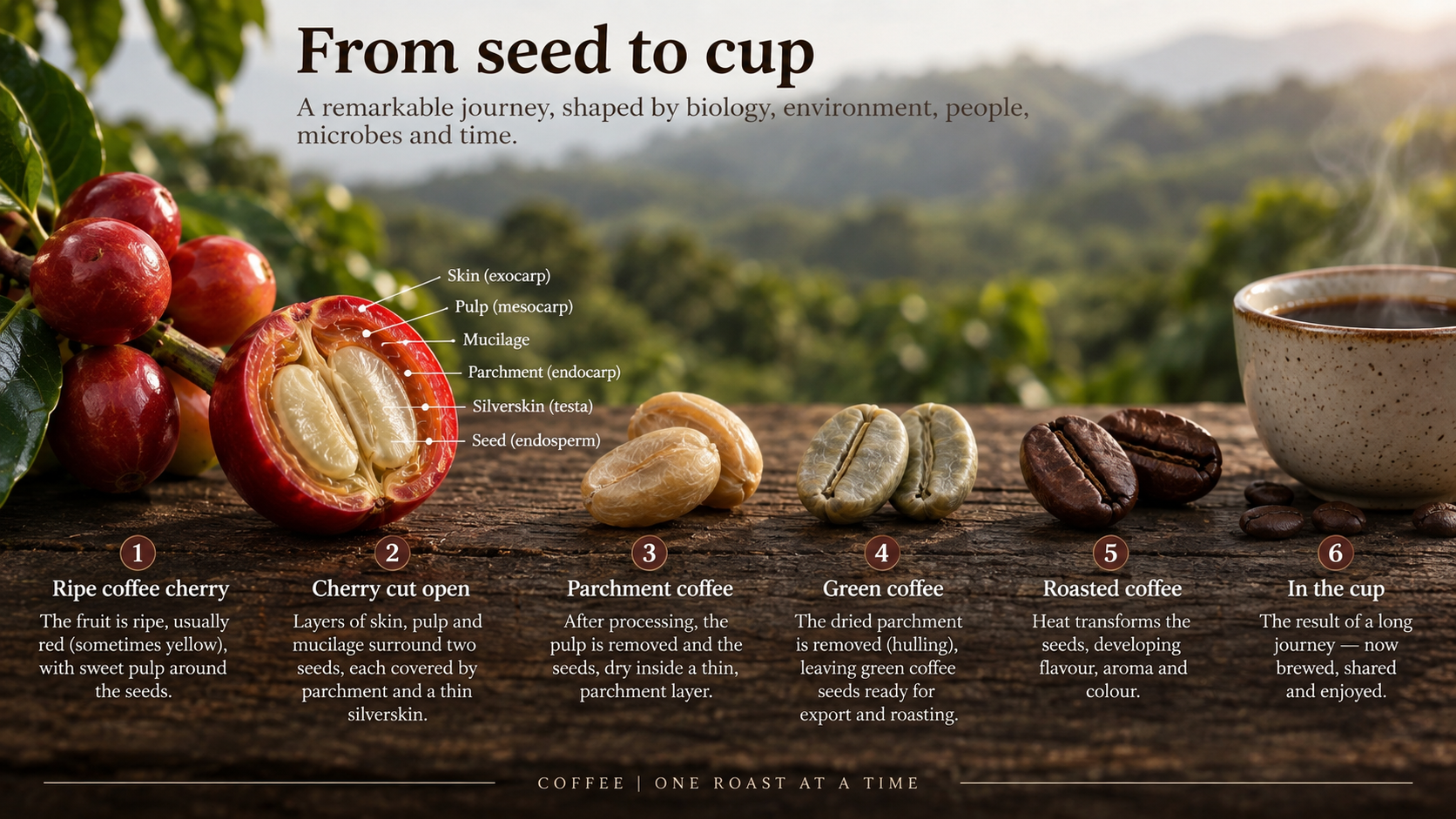
Follow the coffee journey
Start with the seed, then follow growing, harvest, processing, green coffee, roasting, brewing and tasting. Each stage changes what the next one has to work with.
Read the seed-to-cup introduction → · Explore processing · Explore species and varieties · Try the practical roasting path
Explore by subject
Jump to the question you have today. These subjects form the reference library; the published material under each subject grows as I work through it.
Brewing, water & extraction
Water, grind and brewing choices as practical parts of extraction.
Coffee Water Calculator — Beta
ORAT tool · brewing water Coffee Water Calculator A practical calculator for building repeatable brewing water from low-mineral water and simple mineral additions. Beta Recipe helper…
Freshness & storage
What changes after roasting and how storage affects the coffee we drink.
A reference page for this subject is still to come.
Green coffee & quality
What we can learn from unroasted coffee, its condition and its quality.
A reference page for this subject is still to come.
Growing, environment & climate
How place, growing conditions and climate shape coffee.
A reference page for this subject is still to come.
Harvest, processing & fermentation
Harvest choices, processing paths, microbes, fermentation and drying.
Coffee Fermentation Isn’t Good Microbes vs Bad Microbes
UNDERSTANDING COFFEE · MICROBES & FERMENTATION A better way to understand coffee fermentation is as a changing ecosystem. When I first started trying to understand fermentation,…
Microbes & Fermentation
UNDERSTANDING COFFEE → MICROBES & FERMENTATION Microbes & Fermentation Yeasts, bacteria, changing environments and the surprisingly complicated biology between coffee fruit and green bean. Fermentation makes…
Processing Explorer
Plant, fruit & seed
The cherry, the seed and the structures that matter before roasting.
From Seed to Cup – How Coffee Is Shaped
UNDERSTANDING COFFEE / FRUIT & SEED What is a coffee bean? Before coffee is green, roasted, ground or brewed, it is a seed growing inside a…
Roasting science & chemistry
Heat transfer, changing chemistry and what roast measurements can tell us.
Coffee Roasting Thermodynamics – A Beginner’s Attempt to Understand What Is Actually Happening
Coffee roasting thermodynamics: a beginner’s attempt to understand heat While researching the move from my Gene Café CBR-301 to the Kaleido M2, I kept coming across…
Sensory, cupping & flavour
Tasting, comparing cups and making useful sense of flavour.
How I Cup Coffee (and the Simple Cupping Form I Use)
This note supports a short video where I show how I cup coffee at home, and why I keep the process intentionally simple. Cupping is often…
Species, varieties & genetics
Species, cultivated varieties, hybrids and genetic diversity.
Trade, price & value
How coffee is traded, priced and valued along the supply chain.
How Coffee Gets Its Price, From the Farm Gate to the C Market and Specialty Coffee
UNDERSTANDING COFFEE · ECONOMICS How Coffee Gets Its Price, From the Farm Gate to the C Market and Specialty Coffee Coffee pricing confused me for a…
Choose the depth you need
Beginner material gives you a useful starting model. Intermediate material examines mechanisms and exceptions. Advanced material looks more closely at evidence and its limits. A layered reference brings those levels together on one page, so you can go deeper without changing subject.
Existing articles and notes retain their own form. I will build layered references where there is enough material to support them. For now, search this library by subject, format or depth, or browse the articles.
PROCESSING IN PRACTICE
Processing is a path, not a flavour promise
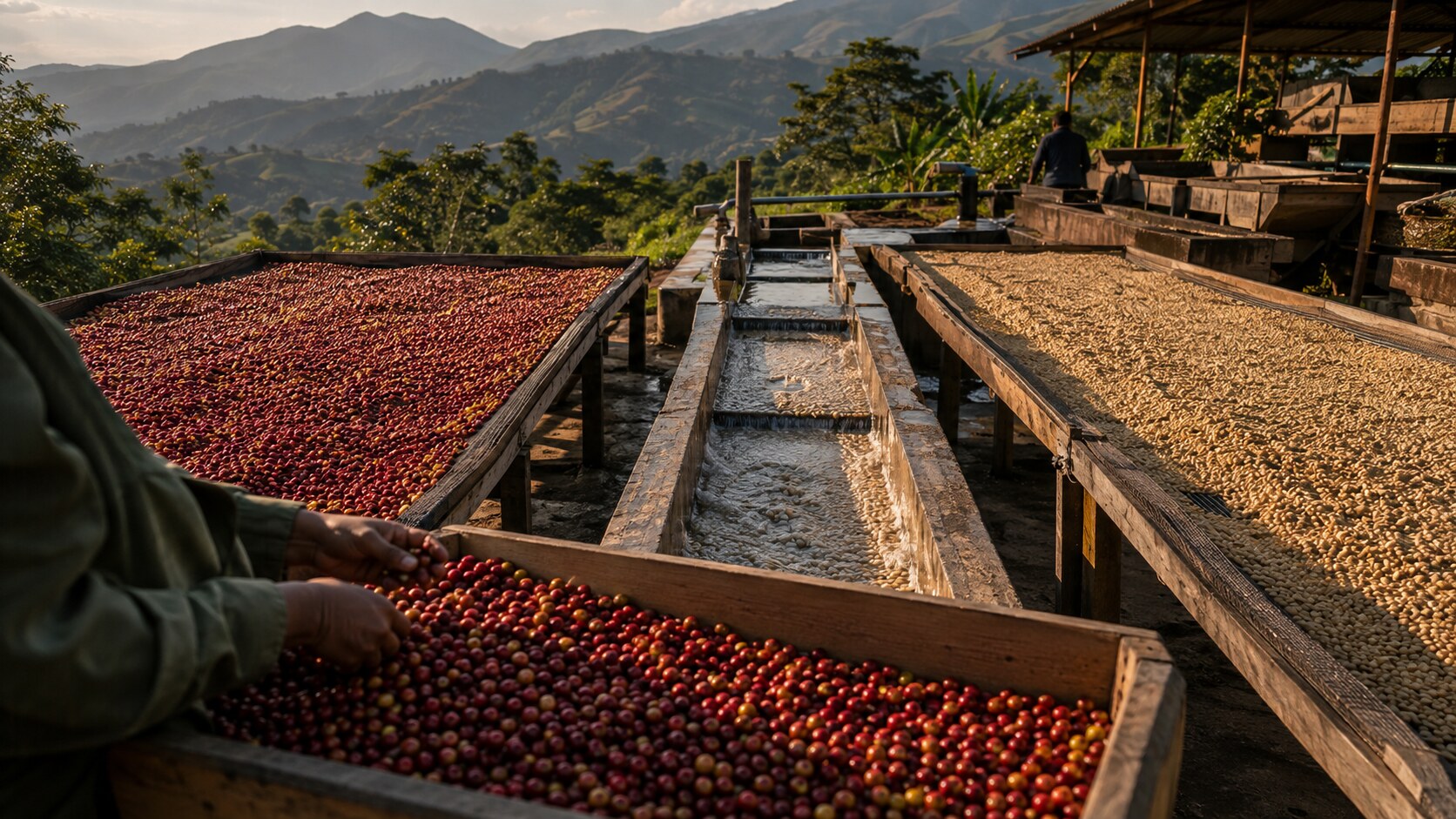
Washed, natural, honey and other labels describe choices made after harvest: what remains around the seed, how fermentation is managed, how water is used and how the coffee is dried. They help us ask better questions, but they do not guarantee one particular taste.
How coffee gets its price
Farm-gate, FOB, landed, roasted and café prices describe different stages of the same coffee. Follow how the Coffee C market, hedging, differentials and specialty pricing connect those numbers.
HOW THE EVIDENCE IS HANDLED
What we know · What evidence suggests · What remains open
These pages are educational summaries, not original scientific research. Where research is used, the original work is referenced. Established findings, developing evidence and open questions are kept separate wherever possible.
To see how these starting conditions meet the roaster, continue into the home-roasting learning path.