COFFEE | ONE ROAST AT A TIME
Coffee, from living seed to the cup.
A curious home roaster exploring coffee biology, processing, fermentation and roasting — following evidence, recording experience and keeping the questions open.
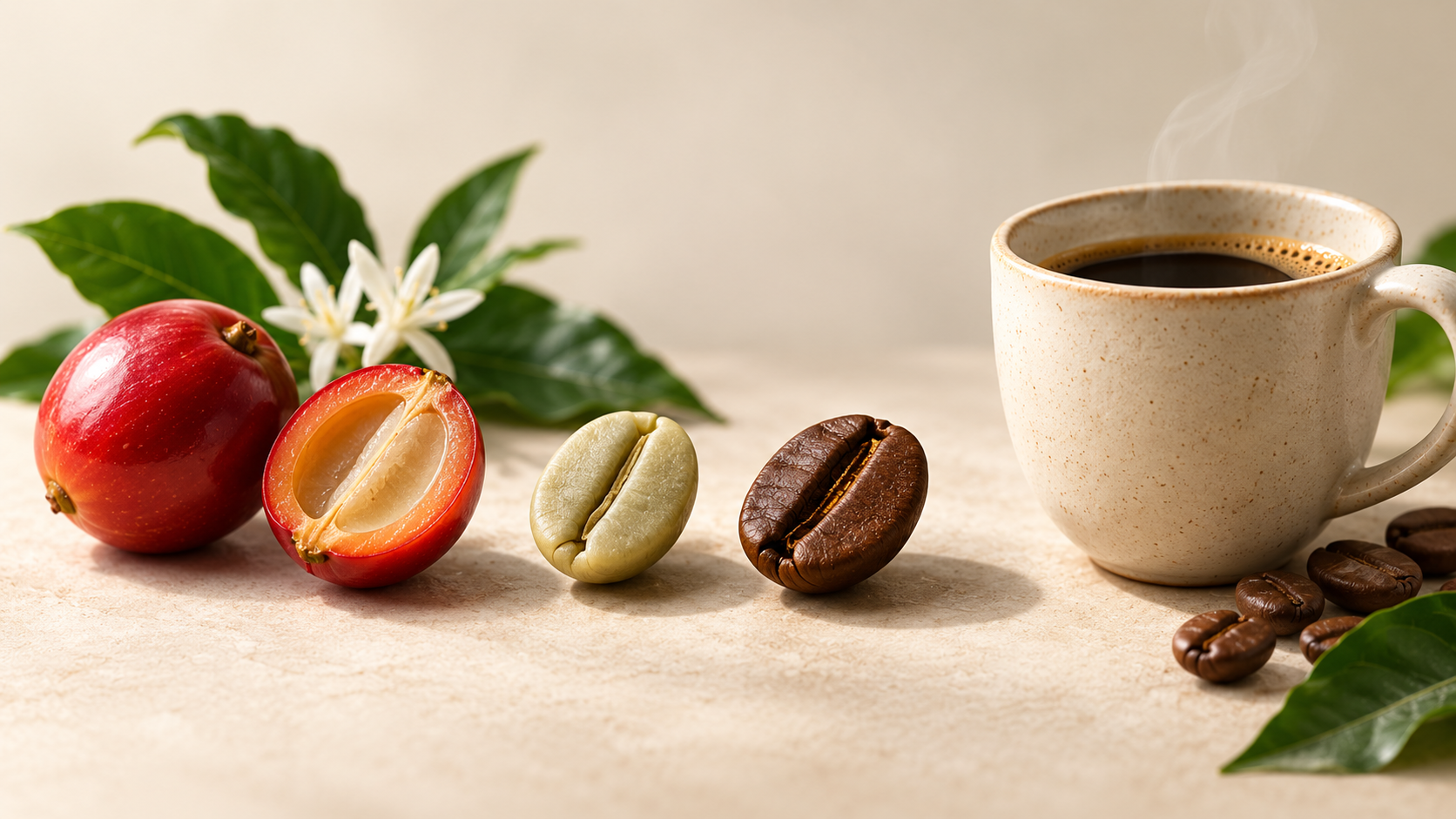
AI-generated illustration — used because this is an armchair enthusiast’s educational project, not first-hand farm photography.
FIND YOUR WAY IN
What are you trying to understand?
Pick the question closest to where you are now. This does not lock you into a course – it simply opens a useful route through the material already here.
A useful first route
Start with the coffee itself, then move toward the roast.
Begin with what a coffee seed is, how processing changes what reaches the roaster, and only then add heat, airflow and roast decisions.
Beginner → Intermediate → Advanced
Learn the machine, then earn the complexity.
The roasting path starts with baselines and signals, then moves into deliberate heat and airflow changes, repeatability, planning and cup evidence.
Question → evidence → next test
Use the records rather than chasing a perfect curve.
Browse roast notes, machine behaviour and methods for separating what was measured from what is only an interpretation.
Before the roaster
Follow coffee backwards from the cup.
Explore processing paths, varieties, fruit and seed structure, microbes and fermentation without pretending a label tells the whole flavour story.
The project now
The Gene Café chapter is closing and the M2 learning chapter is beginning.
Follow the transition into a roaster with more visible signals, more independent control and a deliberately evidence-first learning plan.
LATEST PUBLICATIONS
What I’m learning now
New articles, guides and notebook entries from the project. This list updates automatically as new reading is published.
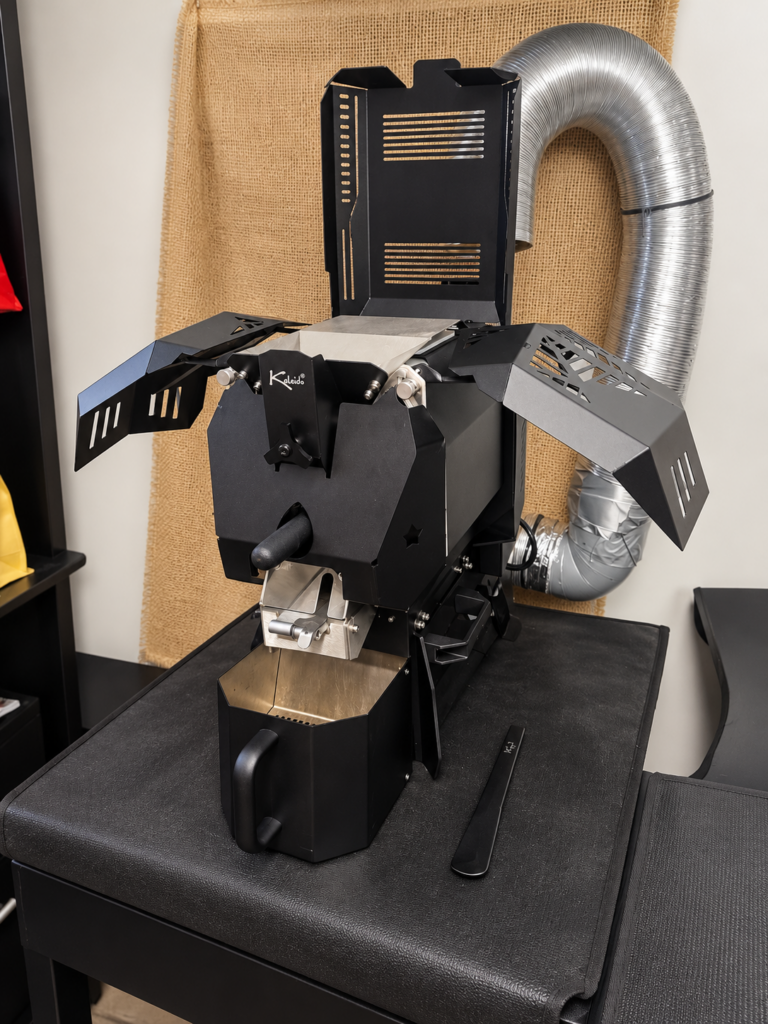
One Month with the Kaleido M2-C: Twenty Roasts Later
A month and twenty roasts with the Kaleido M2-C, from early Artisan adventures to more consistent, drinkable coffee.
Closing the Gene Cafe Chapter
After 215 roasts, heater replacements and a lot of added instrumentation, I am closing the Gene Cafe roasting chapter and carrying the lessons into…
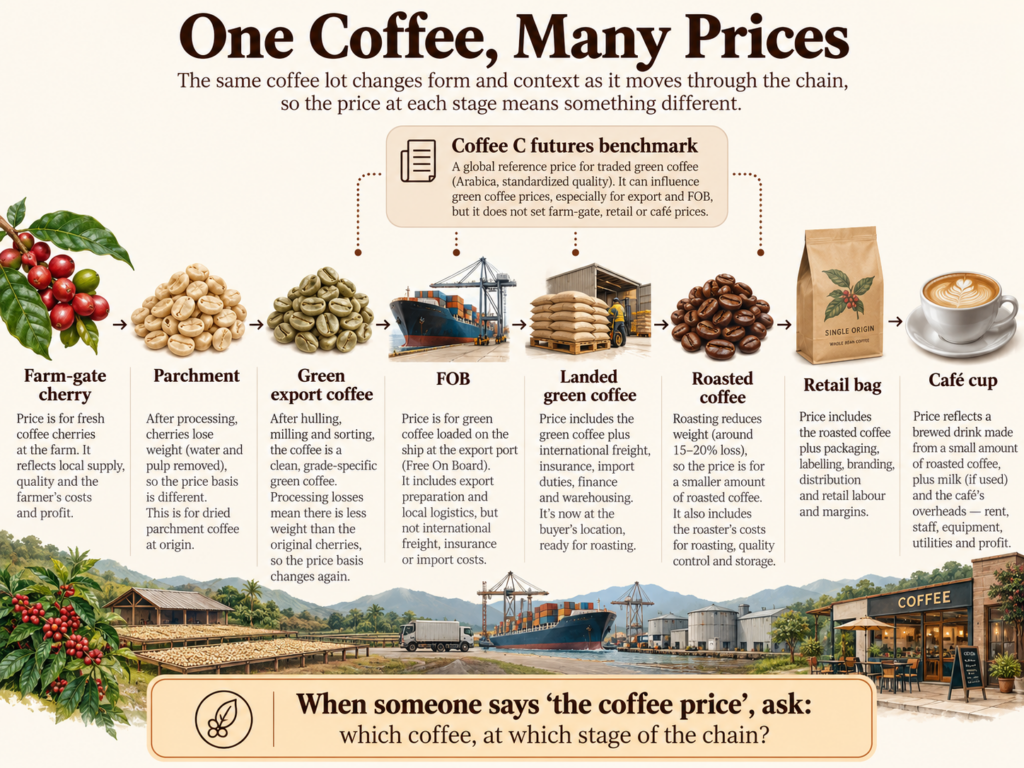
How Coffee Gets Its Price, From the Farm Gate to the C Market and Specialty Coffee
UNDERSTANDING COFFEE · ECONOMICS How Coffee Gets Its Price, From the Farm Gate to the C Market and Specialty Coffee Coffee pricing confused me…
UNDERSTANDING COFFEE
The questions behind the coffee
The educational side of the site follows one connected story: a living coffee seed, the fruit around it, the people and microbes involved in processing it, the chemistry left for the roaster, and ultimately the cup.
Coffee fruit & seed
What a coffee bean actually is, how the living seed is structured and why that matters long before roasting begins.
Processing
Washed, natural, honey and other processing paths — what is removed, what remains and what those labels can and cannot tell us.
Species & varieties
Arabica, Canephora, varieties and hybrids — and the genetic diversity hidden behind familiar coffee names.
Microbes & fermentation
Yeasts, bacteria, changing environments and microbial succession — treating fermentation as an ecosystem rather than a flavour recipe.
THE ROASTING NEXT CHAPTER
From Gene Café to Kaleido M2
The Gene Café has been the foundation of this project. The Kaleido M2 was ordered on 3 September 2026 and is now the next learning platform: more sensors, more control and a much clearer data path through Artisan.
The question is no longer which roaster to buy. It is what actually changes when more of the roast becomes visible — and whether better information leads to better decisions in the cup.

GENE CAFÉ REFERENCE
The practical guide I wish I had when I started.
The Gene Café remains an important part of the project and its evidence archive. The free 53-page CBR-301 Owner’s Field Guide brings together official documentation, photographs, direct observation and lessons from more than 160 real home roasts.
No email gate · Independent of Gene Café and Genesis Co., Ltd.
Useful resources
Coffee Water Calculator
A simple practical calculator for building repeatable brewing water from low-mineral water and measured mineral additions.
Method & Assumptions
How the project separates measurement, observation, interpretation and uncertainty — and why a convincing graph is not automatically a conclusion.
ONE ROAST AT A TIME
Learning in public, without pretending the questions are settled.
Some pages are based on published research. Some are based on recorded roast experience. Some combine the two. The aim is to keep facts, interpretation and open questions visibly separate — and to leave room for the answer to change when the evidence does.
For the heat behind those decisions, read my beginner’s attempt to understand coffee-roasting thermodynamics.